
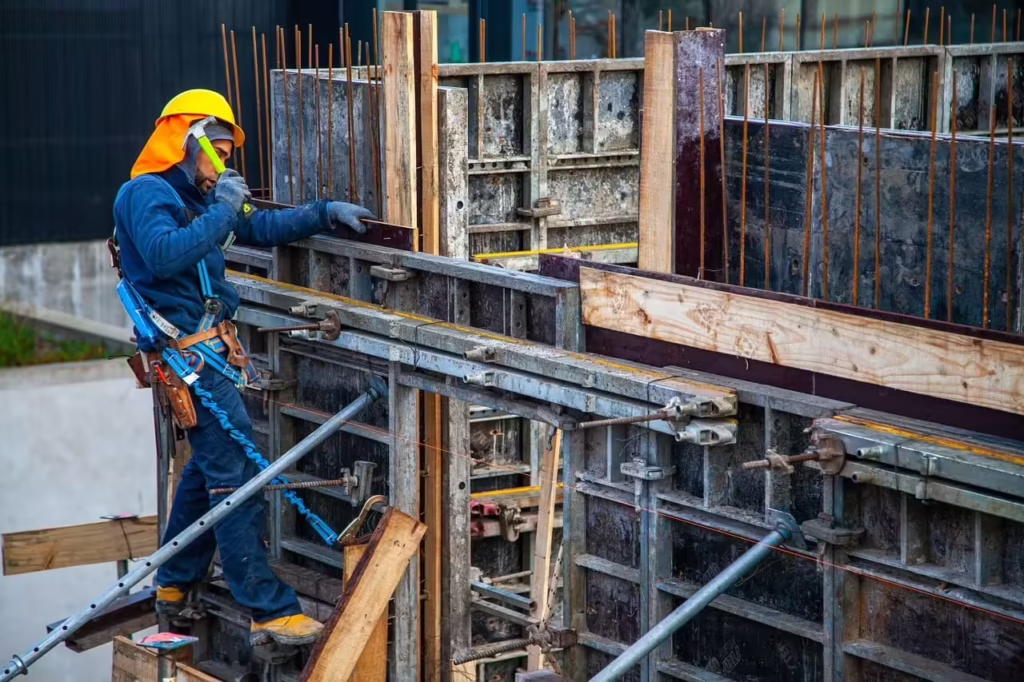
Fall protection systems are critical safety solutions designed to protect workers operating at elevated heights. From construction and maintenance to industrial operations, working at height poses significant risks, making reliable fall protection essential for preventing injuries and fatalities.
These systems play a vital role in ensuring compliance with safety standards and fostering a culture of safety in workplaces where falls are a constant hazard.
Understanding fall protection systems
Fall protection systems are designed to mitigate the risks associated with working at height by either preventing falls or minimizing their impact.
The two primary categories are fall restraint systems, which prevent a worker from reaching a fall hazard, and fall arrest systems, which stop a fall after it has occurred while reducing the forces exerted on the body.
Both systems rely on a combination of components such as harnesses, anchor points, lanyards, and lifelines to ensure worker safety.
Fall restraint systems are typically used when the goal is to limit worker movement, thereby eliminating exposure to a fall hazard.
This is achieved by tethering the worker to an anchor point, ensuring they remain a safe distance from edges or openings.
In contrast, fall arrest systems come into play when there is a risk of a fall.
They allow for greater freedom of movement while ensuring that, in the event of a fall, the worker is caught safely, minimizing the risk of serious injury.
Interesting Post Suggestion: Future of Warehousing How WES Enables Seamless Integration of Automation and Human Labor
Components of effective fall protection systems
An effective fall protection system comprises several essential components that work together to safeguard workers.
A full-body harness is the central element, designed to distribute the forces of a fall across the strongest parts of the body, such as the thighs, shoulders, and pelvis.
Properly fitted harnesses ensure comfort and safety, enabling workers to operate at height for extended periods without restricting mobility.
Anchor points are another critical part of any fall protection system, as they provide the secure attachment necessary to prevent or arrest falls.
These points must be rated to withstand the forces generated during a fall, ensuring they remain reliable in all conditions.
Lanyards and lifelines act as connectors, linking the worker’s harness to the anchor point while offering flexibility and freedom of movement.
In some systems, shock absorbers are integrated to reduce the forces experienced by the worker during fall arrest.
Importance of compliance and proper usage
Ensuring proper use and maintenance of fall protection systems is crucial for their effectiveness.
Employers are responsible for implementing safety protocols, providing the necessary equipment, and offering thorough training to workers.
Employees must understand how to inspect, fit, and use their fall protection systems correctly to minimize risks.
Compliance with regulatory standards, such as OSHA (Occupational Safety and Health Administration) and ANSI (American National Standards Institute), is equally important.
These organizations establish guidelines for fall protection systems, ensuring that all equipment meets specific safety requirements.
By adhering to these standards, companies can protect workers, reduce liability, and create a safer work environment.
Innovations and future trends in fall protection
Technological advancements have led to significant improvements in fall protection systems. Modern systems feature lightweight materials, enhanced comfort, and greater durability.
Innovations such as self-retracting lifelines, smart harnesses with sensors, and automated inspection systems are transforming the industry, offering higher levels of safety and efficiency.
Future trends indicate a growing emphasis on integrating digital technologies, such as IoT and real-time monitoring, into fall protection systems.
These innovations allow for continuous oversight of worker safety, enabling instant alerts in the event of a fall or equipment failure.
Conclusion
Fall protection systems are essential for safeguarding workers who face the risks of operating at height. By combining robust equipment, proper training, and regulatory compliance, these systems prevent accidents and protect lives.
As technology continues to advance, fall protection solutions will become even more reliable, further reinforcing safety in high-risk environments.
For employers and workers alike, investing in effective fall protection systems is not just a regulatory requirement but a commitment to health, safety, and productivity.